


Welcome to Issue No. 046 of Sojourn. An independent platform for hotel identity.
Hello everyone and happy Tuesday.
Last issue was about the gap: what travelers are really looking for, and why they can’t always say it. This issue is about what comes before the stay. Before you book, before you pack, before you arrive. The signals a hotel sends out into the world and what those signals do to the person who receives them.
In today’s Sojourn:
What a signal actually is, and why it matters more than most hotels think.
The difference between signals that carry identity and signals that flatten it.
Three hotels, three different ways of sending the right message, featuring:
Casa Angelina, Zannier Hotels Phum Baitang, Hotel Tugu Bali.
New to Sojourn? Start here. Everything else is in the archive.
The Visible Layer
This week: Peter Zumthor
Peter Zumthor is a Swiss architect who has spent his career building things that make you feel something before you understand why. His thermal baths at Vals, carved from local quartzite stone, are dark and quiet and warm. You walk in and know immediately where you are, not because of a sign or a logo, but because the building tells you. The stone tells you. The light tells you. The silence tells you.
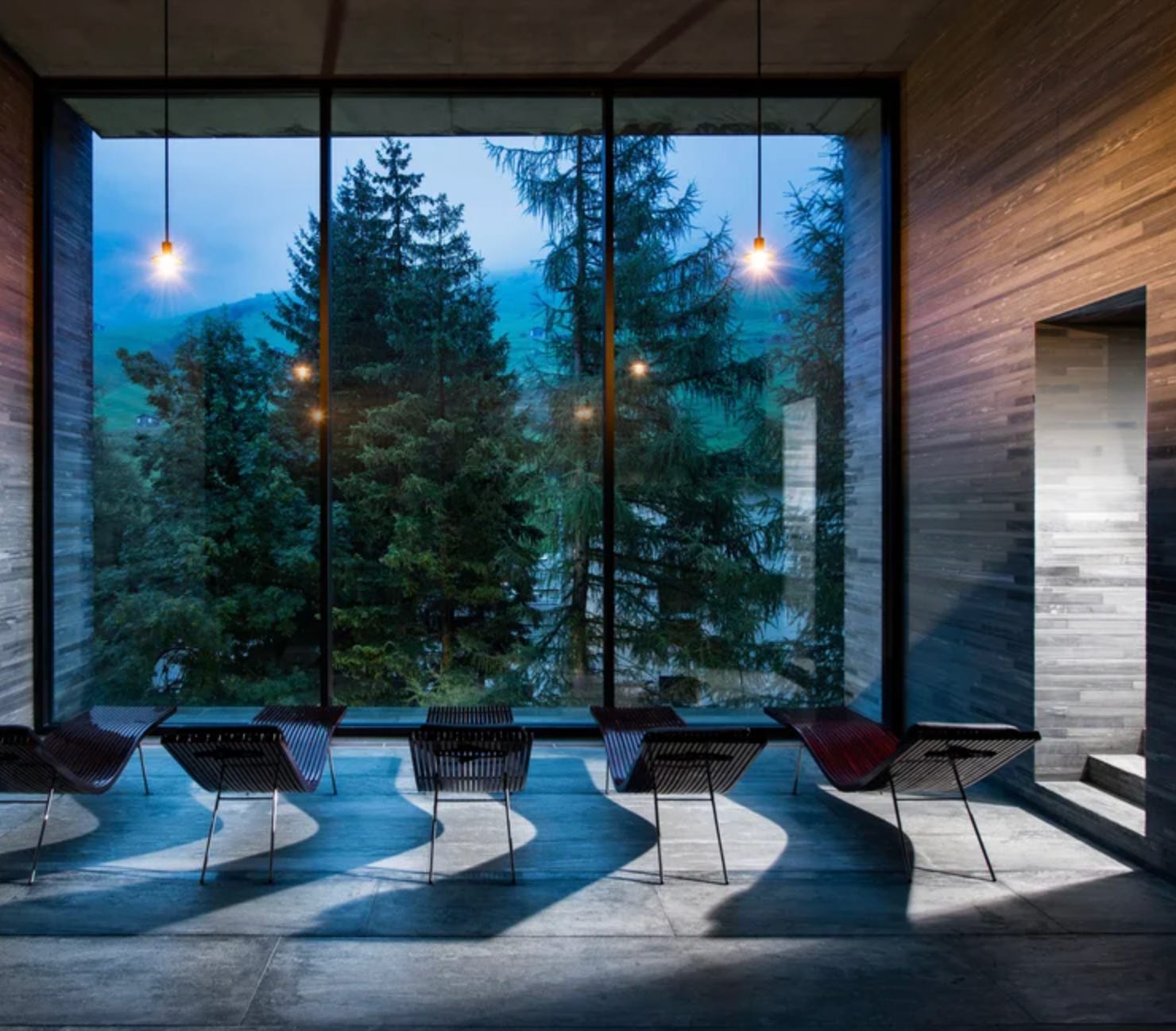
In 2006, Zumthor wrote a short book called Atmospheres. It asks one question: what makes a building feel the way it feels? Not what it looks like. What it feels like. He talks about the sound of a space, the temperature of surfaces, the quality of light at different hours. He is talking, in the end, about signal, the way a building communicates before anyone opens their mouth.


That is exactly what this issue is about. A hotel sends signals long before a guest arrives. The signals are in the photography, the copy, the name, the architecture, the materials. They say: this is what kind of place we are. This is what you will feel here. The hotels that get this right don’t need to explain themselves. The ones that get it wrong spend a lot of money trying. Find Peter Zumthor’s work at zumthor.com and in Atmospheres, published by Birkhäuser.
Interpretation
A hotel is talking to you before you arrive.
It talks through the images on its website, whether they show you what a room looks like or how a room feels. It talks through its copy, whether it says ‘an unforgettable experience’ or something true and specific. It talks through its name, its location, the way it describes its food, the words it chooses and the ones it leaves out.
These are signals, and travelers read them… even when they don’t know they’re reading.
The problem is that most hotels are sending the wrong ones. Not because they’re trying to deceive anyone, because the tools they use to reach travelers such as booking platforms, review sites, social media, and so on, reward a very specific kind of signal. The generic kind. The kind that performs well in a feed and says nothing about what the place actually is.
What a signal actually is:
