


Welcome to Issue No. 043 of Sojourn. An independent platform for hotel identity.
Still thinking about Tuesday’s issue.
Tuesday was about the GM as identity custodian… the person in the building every day, holding the place’s worldview through small decisions most guests never see. Today is the harder question: what does it actually look like when a GM erodes that identity instead?
Because it rarely looks like anything. That’s the problem.
In today’s Sojourn:
The four patterns that quietly erode identity under a GM’s tenure.
Why erosion is almost always well-intentioned.
What the GMs who hold identity do differently and how you’d recognize it.
First time here? Start here. Past issues are here.
Let’s get into it.
The Visible Layer
This week: Neri&Hu
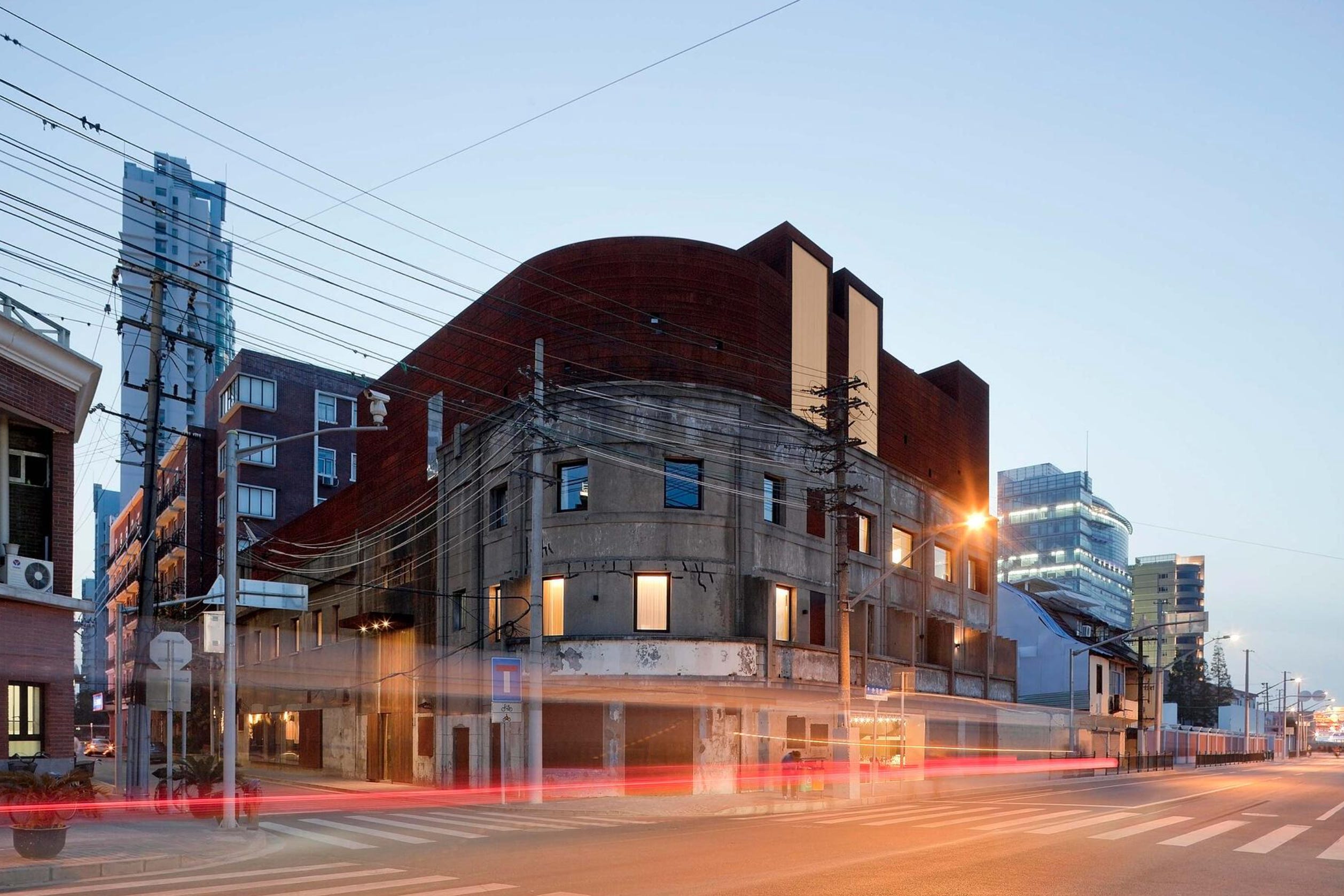
Neri&Hu Design and Research Office is an interdisciplinary practice founded in Shanghai in 2004 by Lyndon Neri and Rossana Hu. I first came across Neri&Hu when I was living in Shanghai, stumbled into one of their projects in Jing'an, a restaurant called Together near my condo, and immediately wanted to know who'd done it. Lyndon Neri and Rossana Hu founded the practice in Shanghai in 2004, and their work spans architecture, interiors, products, and branding. But what runs through all of it is one preoccupation: how a place holds memory. Not as nostalgia. As structure. The conversation between what a space has been and what it's becoming, built into the walls, the materials, the objects, the light.


The two projects here — The Waterhouse at South Bund and The Vertical Lane House — are both Shanghai buildings where the history of the site is the design brief. The Waterhouse is a former Japanese army headquarters from the 1930s, converted into a boutique hotel that makes no attempt to erase what it was. The industrial bones, the raw concrete, the preserved markings, all of it held deliberately, because the identity of the place is inseparable from what happened there. The Vertical Lane House does the same with the spatial logic of the traditional Shanghai lane house: the narrow proportions, the relationship between inside and outside, the rhythm of the shikumen typology, carried forward rather than replaced. Both are the physical counter-argument to everything this issue is warning against. The identity is in the architecture. It holds because it was built to. Find Neri&Hu at neriandhu.com.
Interpretation
Identity erosion in a hotel almost never announces itself. There’s no moment where someone decides the place should become something else. There’s no single bad decision you can point to. What happens instead is a series of reasonable calls, each one defensible, each one small, but that it compounds over time into a place that no longer ‘reads’ like itself. The guests who’ve been coming for years feel it first…. they can’t name it, they just know something has changed.
The GM at the center of this process usually doesn’t know it’s happening either… and that’s what makes it so hard to diagnose and harder to stop.
Four patterns come up again and again in hotels that drift under a GM’s tenure that show up in how the place runs, slowly, then all at once.
The first pattern: optimizing away the friction that was doing work.
Not all friction is bad. Some of it is load-bearing.
The long walk from reception to the first room. The absence of a spa menu at check-in. The dining room that doesn’t take reservations. These things can look like operational inefficiencies, and a GM trained to see through the lens and optimize will eventually fix them. What they don’t always see is that the friction was intentional. It was creating pace, creating discovery, creating a specific relationship between guest and place. Hear me out on this:
