


Traveler First is a Sojourn series studying the shift from inventory-first to traveler-first hotel storytelling and what it means for the future of hospitality.
I’ve been in Amsterdam this week, and if you’ve ever been, you know the city has a way of slowing you down without asking…
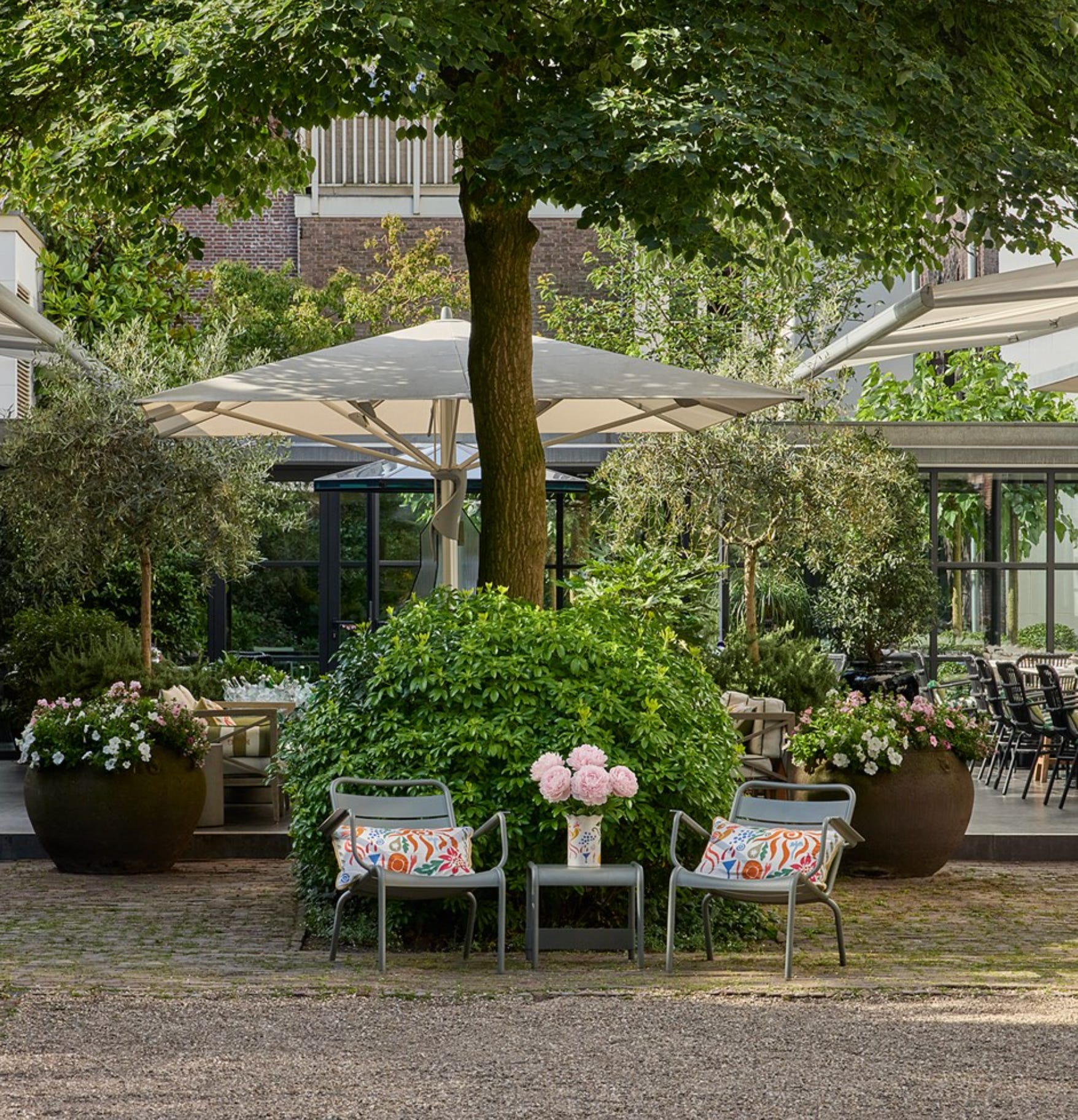
I spent time at the Pulitzer and what I noticed first wasn’t the rooms or the design, it was the courtyard. The crunch of gravel, a huge old tree at the center, a church bell somewhere nearby. The kind of details that make a place in my opinion feel like it has its own life, completely separate from whoever is staying there.
That’s my version of the Pulitzer in a nutshell.
The hotel is made up of 25 connected canal houses, originally built in the 17th and 18th centuries. Peter Pulitzer, grandson of Pulitzer Prize founder Joseph Pulitzer, bought the first twelve in 1970 with one guiding idea: ‘The house of your neighbor is for sale only once.’ He kept buying until the hotel had grown into something unlike anything else in the city.
At its center sits the Pulitzer Gardens is a quiet, hidden courtyard that most people walking along the canal would never know exists. Serene in the best way in the middle of one of Europe’s busiest cities. The kind of place that’s genuinely hard to find anywhere else, especially in a lively place like Amsterdam.
What the current copy says
Here’s how the Pulitzer describes itself online:
‘A luxury hotel with a unique blend of traditional and modern Dutch craftsmanship hidden amongst the city’s iconic canals.’
It’s very well written. The history is there, the design story is there, the craftsmanship is there. You get a real sense of what the place looks like and where it comes from.
What it doesn’t quite do ‘yet’ is speak to the person who actually needs this hotel and why.
Reading it through the Traveler First lens
Who it’s for. The Pulitzer isn’t for everyone, and that’s a good thing. It’s for the curious and the artistic, the traveler who wants to feel ‘embedded’ in Amsterdam, not just staying near the canals but actually inside the city’s history. Someone who finds it genuinely exciting that the building they’re sleeping in once belonged to Dutch merchants and aristocrats. Not a nice detail, but a reason to choose it.
What it serves. The desire to belong somewhere, even briefly. To arrive in a city that has been moving for 400 years and feel, for a few short days, like you’re part of its rhythm, the energy, rather than passing through it. The Pulitzer serves the traveler who is tired of feeling like a visitor somewhere random.
What it makes possible. A different relationship with time. Four centuries of history make your own sense of urgency feel smaller. Things slow down, not because the hotel ‘asks you’ to, but because the place has been standing there for so long, and in my view, there’s something grounding, and also fascinating, at the same time about sleeping in a room with that kind of memory.
What personal moment it meets. The cultural trip with more depth than most. The solo traveler who wants the pulse of the city but not the outside noise. The couple looking for somewhere that feels like a discovery rather than a destination. Anyone who has stayed in too many hotels that could be anywhere and wants, for once, somewhere that could only be here.
What the right traveler would recognize. The maze of connected houses, the library of Pulitzer Prize-winning books, the Collector’s Suites… imagined around characters who might have once lived there: an artist or creative, an eccentric book lover, a grand antique collector. The hidden garden at the center that most people walking the canal would never know exists. The feeling that this hotel has a life beyond hospitality.
That specific person would love this hotel immediately… I know I did. The question is whether the current language ‘finds’ them before they find the hotel.
In traveler-first language
What it says: ‘A luxury hotel with a unique blend of traditional and modern Dutch craftsmanship.’
What it could say: ‘For the curious and the artistic, those who want to spend a few days living inside Amsterdam’s history, not just looking at it.’
What it says: ‘The décor makes you feel at the same time at home and immersed in the city’s culture.’
What it could say: ‘400 years of Amsterdam in 25 canal houses, redesigned for how people want to live today. Every room has a past. Every corner has a story.’
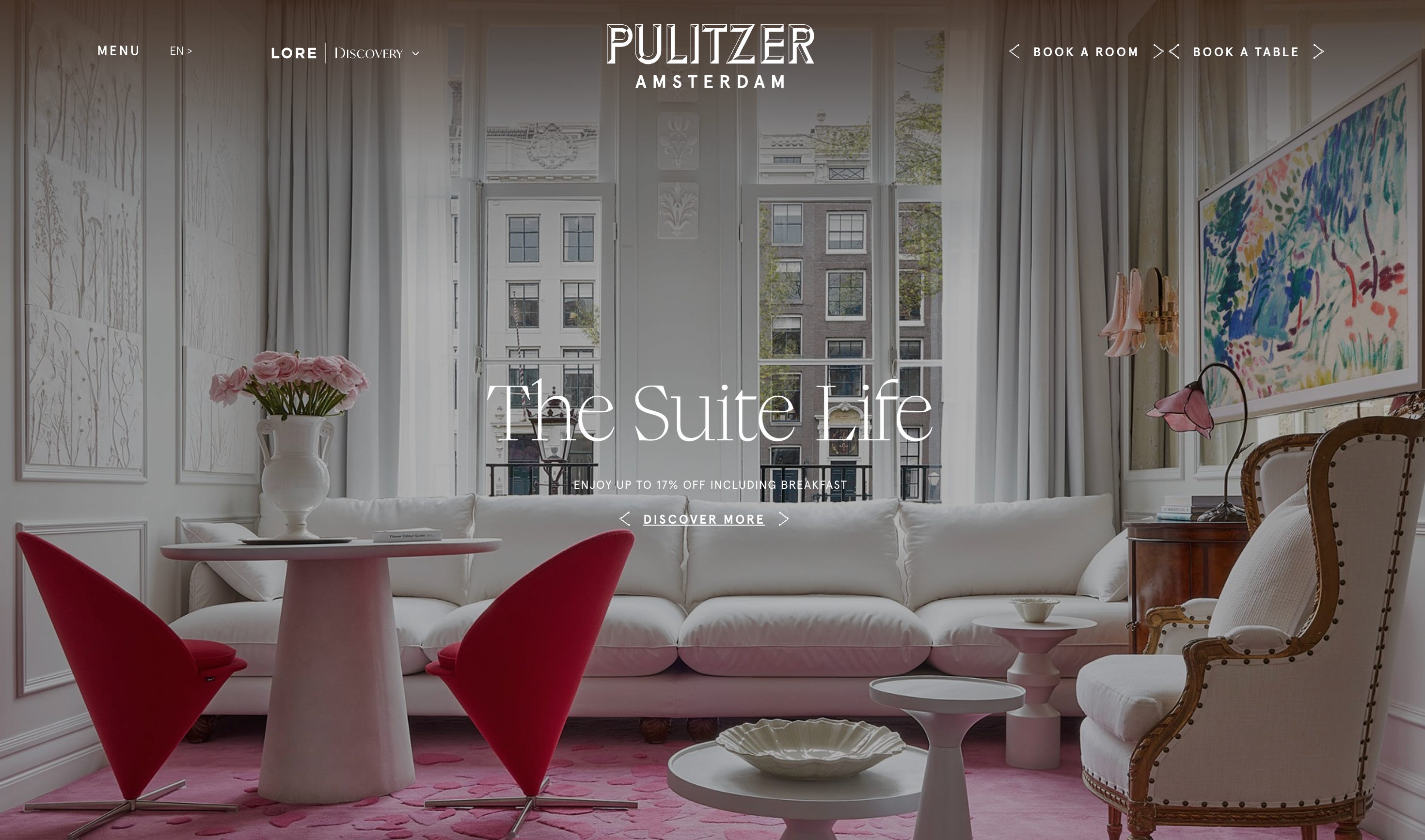
Lastly, the first thing you see on the Pulitzer website right now is a suite promotion: ‘The Suite Life — Enjoy up to 17% off including breakfast.’ The image behind it is stunning… colorful art, tasteful decor, canal houses framed through tall windows, a room that looks like someone actually lives there.
The discount is real. But it’s doing the work that the experience should be doing.
What it says: ‘The Suite Life — Enjoy up to 17% off including breakfast.’
What it could say: ‘Wake up to Amsterdam the way it was meant to be seen. Suites now available with breakfast included.’
The offer stays. The traveler arrives first.
The lesson
The Pulitzer is already doing something most hotels can’t, it IS the city, not just located in it.
The opportunity is to say that more directly and to speak to the traveler who is looking for exactly this: a place to feel like they’re going back in time, without giving up the present.
That traveler is out there. The language just needs to find them.
If this sparked something for you, share it with a hotel founder, operator, or marketer who might be ready to see their property through a different lens. The more people thinking traveler-first, the better.
Traveler First is a Sojourn series studying the shift from inventory-first to traveler-first hotel storytelling and what it means for the future of hospitality.
If this resonates, there's more here on the ideas behind it, and on what's being built around them: Identity-Led Travel™, Identity-Led Hospitality™, Elo Hotels™