


Welcome to Issue No. 051 of Sojourn. An independent platform for hotel identity.
Seven months ago, before ILTM Cannes opened, I wrote not only one, but two, articles that hospitality was turning inward.
Not because the industry had suddenly discovered silence or because travelers had stopped wanting beautiful things. The shift I was watching was much deeper than that. From what a hotel provides to what it makes possible. From what a traveler sees to what they are able to feel, understand, or become because of where they are.

Since then, the language has started appearing elsewhere.
My take has always been about the fact that luxury is quieter. More reflective. More intimate. Less about display and more about meaning.
All of that is true.
But something important gets lost when the ‘inward turn’ is reduced to quiet luxury.
Here today:
What it originally named.
What the industry is turning it into.
And why the distinction matters.
Here’s what I’ve been thinking.
The Visible Layer
This week: Hélène Binet
Hélène Binet is a Swiss-French photographer known for her work with some of architecture’s most known practitioners: Peter Zumthor, Daniel Libeskind, David Chipperfield, Zaha Hadid, and others.
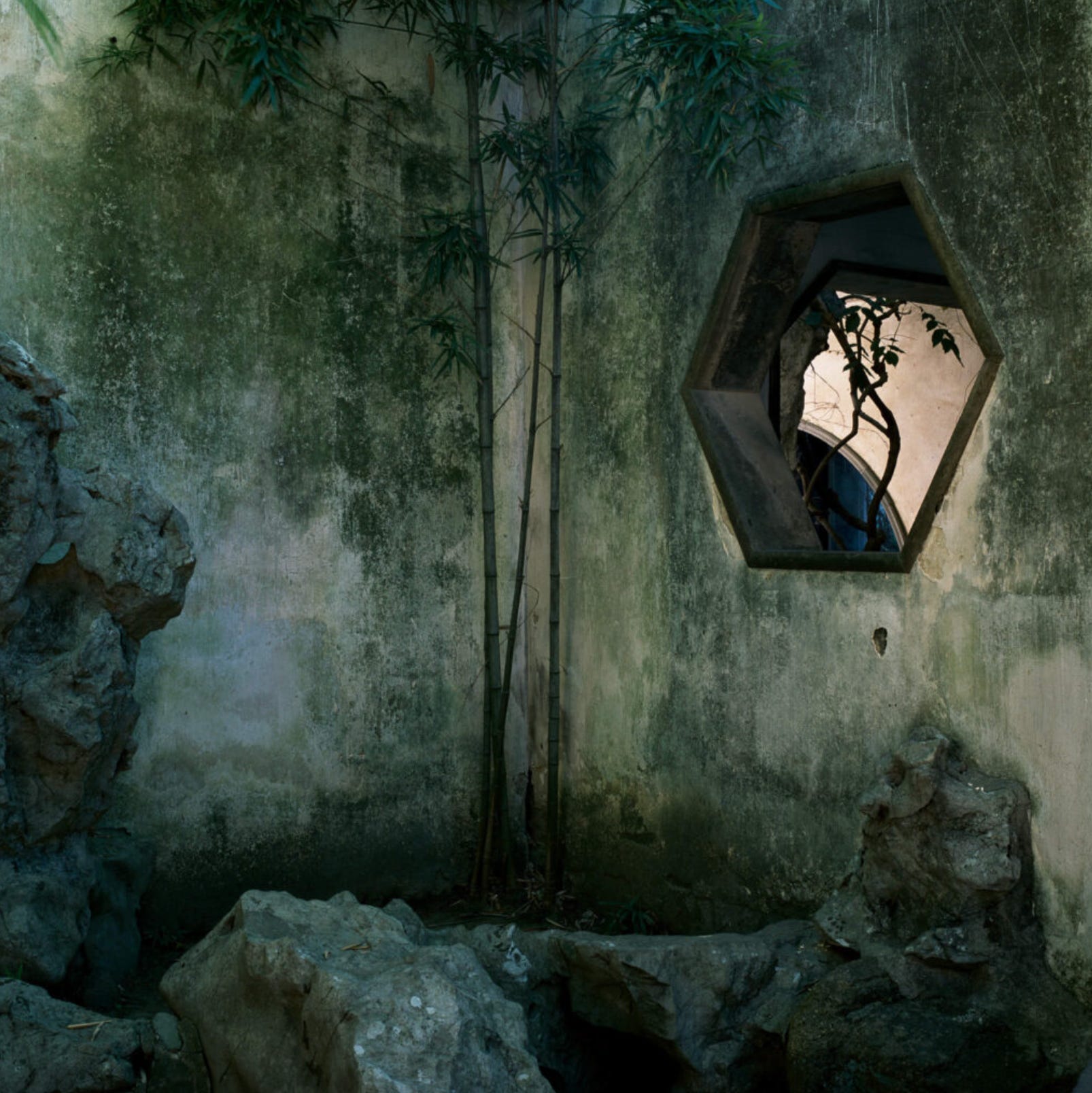
She photographs buildings, but the building is never simply the subject. Light is. Material is.
The relationship between the two is:
Binet still works primarily with analogue photography. The process is slow. It requires her to stay with a place, to follow what the light is doing, and to accept that the image cannot be separated from the hour in which it was made. Love this!~ Just as place and people complement each other.
She has described herself as meditative. She likes tripods.
That sentence explains more than it appears to.
A tripod means the photographer cannot keep moving in search of the image. At some point she has to stop. To place herself somewhere. To wait as long as needed for the architecture to show what really is as a result.
Her photographs of Peter Zumthor’s Therme Vals are dark, but darkness is not their subject. They are quiet, but quiet is not their meaning, too.
The images have weight: stone, water, shadows. A narrow ray of light crossing a surface. Body is often absent, but what it can/could be is everywhere. You do not look at the photographs and think only about what the building looks like, you begin to anticipate what the stone would feel like under your hand. How your voice might change inside a certain room. What the temperature of the water would do to your awareness of your own skin. Photographs you can ‘feel’ it.


Binet does not make the architecture look inward, she presents the ‘conditions’ through which the ‘architecture’ turns your attention inward.
Those are not the same thing, and that’s the inward turn I am referring to.
Not the stone, not the silence. The path of your own.
Find Hélène Binet’s work at helenebinet.com. Her Therme Vals series can also be viewed through Divisare.
Interpretation:
On July 16, Accor published an article titled ‘Luxury’s Inward Turn: From Flamboyance to Quiet, Depth and Meaning.’
The title stopped me, of course.
Seven months earlier, as ILTM Cannes opened, I had written:
This is the era hospitality turns inward. (see articles here and here.)
At the time, I was tracing a movement that had been developing across travel for years. Wellness had shifted luxury’s attention from external indulgence toward internal restoration. Culture and sense of place had made meaning more important than just perfection. Neuroscience, psychology, and human behavior had entered hospitality’s conversations. Emotional transformation had become part of what travelers were seeking, even when they did not use those words or had language for it.
The movement was becoming increasingly clear:
From amenities to identity.
From service to resonance.
From aesthetics to internal transformation.
From what you see to who you become.
The industry is now naming the shift.
But it is also beginning to narrow it.
What the inward turn is becoming:
In its most common interpretation, inward luxury means privacy.
Fewer people, less noise, more space, private entrances or access, hidden villas, intimate dining, slower rituals, discreet service, and yes, the ability to disappear from the world without anything feeling unavailable.
Accor’s article calls this controlled absence: the removal of crowds, stimulation, visibility, and displays of wealth. It translates the idea operationally through arrival routes that avoid public lobbies, protected dining and wellness spaces, private pools, larger suites, low-density resorts, and service that remains present without becoming intrusive.
This is a real change.
For decades, luxury made itself visible with the lobby, the materials announced, the service, the guest’s proximity to other people of wealth and status was part of what the experience provided.
Quiet luxury changes the signal.
Wealth is no longer demonstrated through how much the guest can access in public, but through how completely the guest can withdraw from it. The privilege is not being seen at the right table but instead having a table no one else can actually reach.
That is an inward movement of a kind.
But it is not the whole inward turn I’ve been writing about.
What quiet luxury gets right:
The first thing quiet luxury understands is that excess has become exhausting, and I think most of us agree with that.
A traveler who spends the rest of life surrounded by notifications, demands, decisions, visibility, and performance does not necessarily want hospitality to provide more.
Sometimes the most luxurious thing a hotel can offer is the ‘removal of pressure’.
The second thing it understands is that privacy changes perception… when the room is protected from interruption, time begins to feel different. Attention returns. The body loosens, what was inaudible becomes easier to hear.
And the third is that restraint can create meaning.
A place does not need to announce everything it knows, sometimes identity becomes more present through what has been left alone without touch: an old wall, a local ritual, a view without an object placed in front of it, a silence no one has tried to fill.
Quiet can create the conditions for an inward experience.
But conditions are not outcomes.
A silent hotel can leave a person still entirely unchanged.
What the inward turn actually is:
The inward turn is not a design language but a change in where the value of hospitality is located.
The traditional luxury experience directs attention outward. Toward the room, the view, the service, the object, the access, the perks, the evidence that something exceptional has been acquired.
An inward experience changes the direction of that attention.
The place still matters, the room and view and service still matter, but their value comes from what they make available inside the traveler.
Clarity.
Recognition.
Restoration.
Permission.
Perspective.
Creativity.
Inspiration.
A renewed awareness of something that daily life had made difficult to see or hear… and this does not require silence.
A crowded table can turn someone inward, so can music, conversation, a landscape too large to absorb, a city that makes a person reconsider how they have been living all along, a host who introduces them to a tradition that changes their perception of care.
An inward experience may be quiet, but it may also be vivid, communal, disorienting, playful, or alive with sound.
The defining question is not:
How little stimulation does this place provide?
It is:
What becomes possible within the person because of the experience this place creates?
What quiet luxury turns it into:
Once the inward turn becomes just a ‘luxury trend’, it becomes easy to reproduce aesthetically.
Stone.
Neutral color.
Low light.
A listening room.
A private ritual.
A solitary chair positioned toward a landscape.
The signs of inwardness become recognizable long before the experience itself has been understood.
This is how hospitality repeats itself.
A genuine human need appears, the industry detects it, design translates it into visual codes, those codes spread and eventually, hotels everywhere begin to signal the same old promise through the same materials, language, and images.
Stillness becomes a palette.
Meaning becomes programming.
Reflection becomes an amenity.
See the pattern?
The inward turn, which should make a hotel more specific to the person and place, produces another category of hotels that look increasingly alike.
The profile is beautiful, the language is correct, but the internal ‘movement’ the hotel promised may never happen.
What gets lost:
Three things, specifically.
The first is the body.
Inwardness is often spoken about as if it happens entirely in the mind. Reflection. Clarity. Perspective. But the movement inward usually begins through the body.
Temperature. Scale. Light. Sound. Texture. Movement. The quality of the air. The way a room changes the volume of your voice. The difference between entering somewhere quickly and being made to cross somewhere slowly.
When inwardness becomes an aesthetic, the appearance remains and the intelligence disappears.
The second is identity.
Quiet luxury is frequently presented as though the same conditions will produce the same value for everyone. Privacy. Silence. Absence. Seclusion.
But people do not return to themselves in identical ways.
One traveler needs retreat. Another needs encounter. One needs to disappear. Another needs to be recognized. One needs the forest. Another needs the buzz of a city where no one knows their name. See what I mean?
Identity-Led Hospitality™ does not assume that inward always means withdrawal. It understands the specific internal movement a particular place is capable of holding, and the person for whom that movement matters.
Aman offers stillness.
Habitas often works through participation and cultural encounter.
A family-run hotel may create belonging not through privacy, but through the feeling of being known.
The inward turn is not one emotional outcome but the movement toward the outcome that is true for that specific guest, in that specific place.
The third is change.
Quiet luxury is often designed around how the guest feels while they are there.
Protected. Unhurried. Undisturbed. Rested.
The inward turn asks what remains afterward…
Did the place simply provide relief from the guest’s life, or did it return them to that life with something newly visible?
Did it create escape, or perspective?
Did the traveler enjoy a quieter version of the same self, or encounter something that changed their understanding of who that self might be?
Not every hotel needs to transform its guests and that claim would become performative very quickly.
But when hospitality promises meaning, renewal, or reconnection, the question matters.
What, exactly, is being renewed?
What is the guest reconnecting with?
What can they see on departure that they could not see on arrival?
Without that movement, inwardness is not transformation.
It is simply insulation.
What the hotel loses:
When a hotel mistakes the inward turn for quiet luxury, it begins with the codes instead of the truth. It asks how to make the space calmer before asking what the place is capable of making someone feel.
It adds private rituals before even understanding what kind of relationship the guest should have with the property.
It borrows the materials of retreat, the language of meaning, and the appearance of depth.
The result may be beautiful but it may also be interchangeable with every other hotel responding to the same trend.
The hotel loses the opportunity to discover its own form of inwardness.
For one place, that may be solitude.
For another, belonging.
For another, a physical encounter with landscape.
For another, creative permission, cultural disorientation, sensuality, memory, or play.
Identity begins when the hotel stops asking what the market associates with meaning and starts asking what kind of internal experience only this place can project.
What the traveler loses:
The traveler may receive everything quiet luxury promises.
Privacy.
Ease.
Beautiful restraint.
Protection from interruption.
And still leave without having encountered anything other than comfort.
There is nothing wrong with comfort and sometimes comfort is just what is needed but comfort and inwardness are not synonyms.
The traveler loses when the hotel assumes that ‘removing’ the world is the same as helping someone ‘hear’ themselves.
They lose when silence has been simply designed but nothing inside it has been made meaningful.
They lose when a place protects them from friction so much so that it also protects them from discovery.
And they lose when the language of transformation raises an expectation that the experience itself has not been designed to capture in the first place.
Bottom line:
The inward turn is not quiet luxury.
Quiet luxury is one expression of a much larger change: the movement of hospitality’s value from what surrounds the traveler to what happens within them.
Quiet can make room for that movement.
Privacy can protect it.
Stillness can deepen it.
But none of those things guarantees it. It’s not a promise.
The inward turn is not marble becoming stone, maximalism becoming restraint, or a crowded lobby becoming a private entrance.
It is not an aesthetic correction but a change in direction.
From the hotel as something the traveler consumes to the hotel as something the traveler enters into relationship with.
From atmosphere as appearance to atmosphere as an internal event.
From what the place contains to what the person can access because they were there.
Hélène Binet’s photographs of Therme Vals are quiet, but the silence is not the point.
The point is what becomes audible inside it.
As always, the inbox is open. If something here landed, just reply. I read every message.