


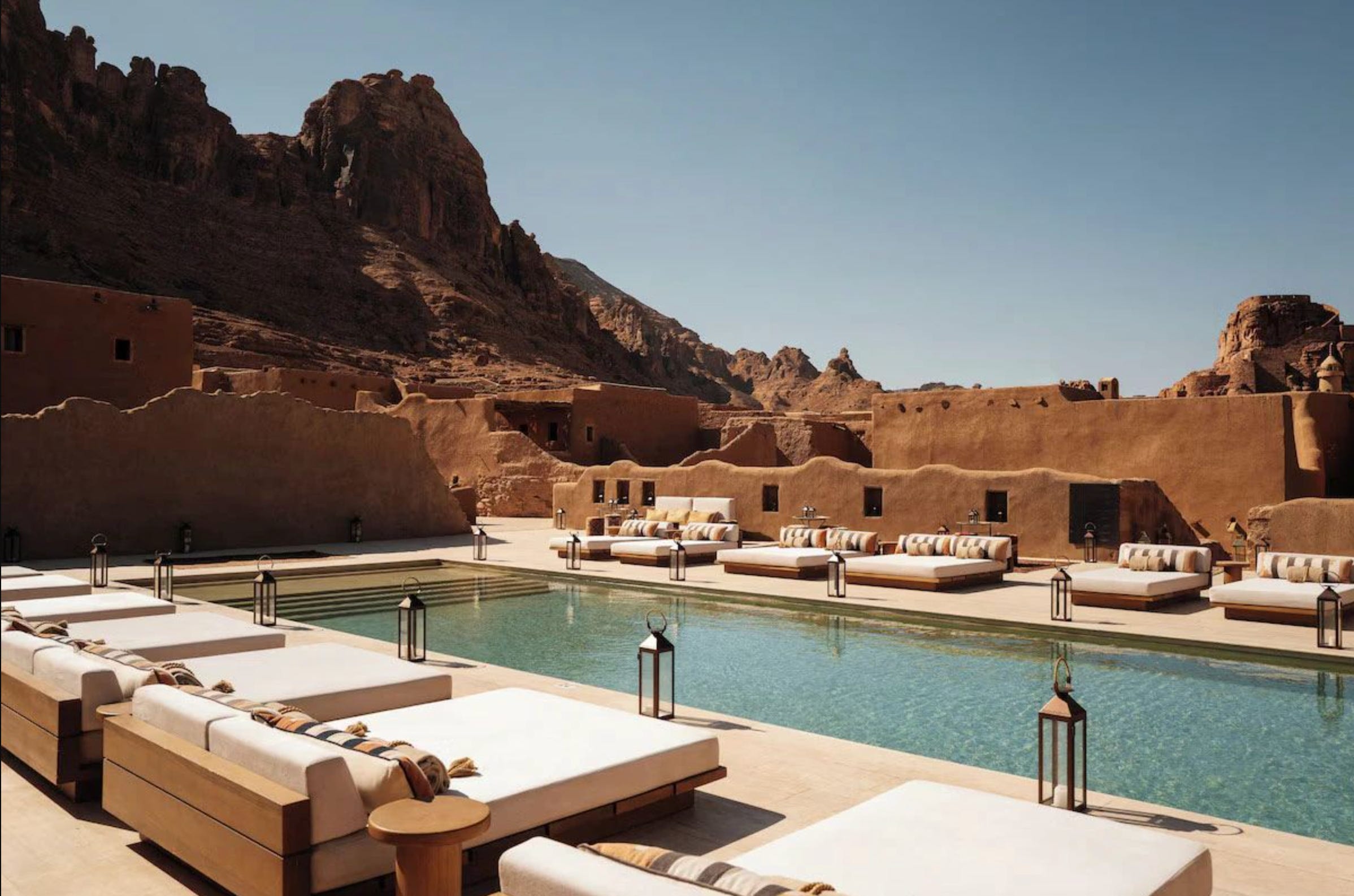
Welcome to Issue No. 028 of Sojourn. An independent publication delivering strategic interpretation for leaders shaping the future of travel and hospitality.
Good morning and happy Tuesday everyone,
Quick note: if you’re new here, or want to catch up on the best of Sojourn, I’d recommend that you start here.
For today’s issue: something I keep coming back to: the hospitality market has never had more options, and yet finding something that feels genuinely distinct is harder than it’s ever been. More properties, more concepts, more openings, and somehow the field feels, narrower? Everything is referencing the same things. The same materials, the same palette, the same language around wellness and intention and craft and so on. The category is expanding and shrinking at the same time…
Interpretation: Sameness spreads fast in hospitality because the signals of quality have become a shared vocabulary. Warm neutrals, raw textures, considered lighting, these things once communicated restraint and care. Now they communicate category. When every property in a segment speaks the same aesthetic language, the language stops doing differentiation work. Travelers stop seeing individual brands and start seeing ‘types’, and types compete on price. Identity, real identity, not aesthetic identity, is what interrupts that dynamic. It’s what makes a brand visible as itself rather than as a representative of a category.
The strange thing is that as the market fills up, distinct identity becomes easier to spot and harder to replicate. There’s more noise to stand out from. More sameness to differentiate against.
What identity actually is: It’s not a logo or a color palette or a carefully chosen font. It’s a consistent point of view about what good looks and feels like, held across every decision the brand makes (touchpoints), from the architecture to the menu to how staff speak to guests. When that point of view is clear and genuinely held, it creates recognition. When it’s borrowed or taken from references, it creates a property that looks right but doesn’t feel like anything specific.
The brands with real identity tend to be slightly polarizing. Not everyone responds to them. That’s the point. A brand that everyone finds appealing is a brand with nothing strong enough to say. The ones that attract a specific kind of person deeply are the ones that last.
Why this matters now more than before: There's more supply than ever, and travelers have more information than they've ever had to navigate it. That combination means more comparison, and comparison, when brands aren't distinct enough, drifts toward price. The properties holding their ground right now aren't doing it through advertising or distribution. They're doing it because their identity is clear enough that the right guests find them and don't need much convincing.
That’s a different kind of resilience. And it’s becoming the primary advantage in a market where everything else can be copied.
Paid subscribers, the inbox is open. Questions, follow-ups, or a topic you’d like me to look at — reply to any issue. I read every email.
Bottom line: The market is full. The brands that cut through aren’t the ones with the most reach, they’re the ones with the clearest sense of who they are. Identity is what makes a brand findable by the right people, memorable after the stay, and worth returning to. In a market where sameness spreads fast, clarity is the differentiator that compounds.
What does your brand’s identity actually say, and is it specific enough to attract the right people and quietly turn away the wrong ones?